Outbound & Re-engagement
AI Voice Agent for Education Admissions: Answering Enquiries and Chasing Applications at Scale
Nov 27, 2026
Part of AI voice agent for education
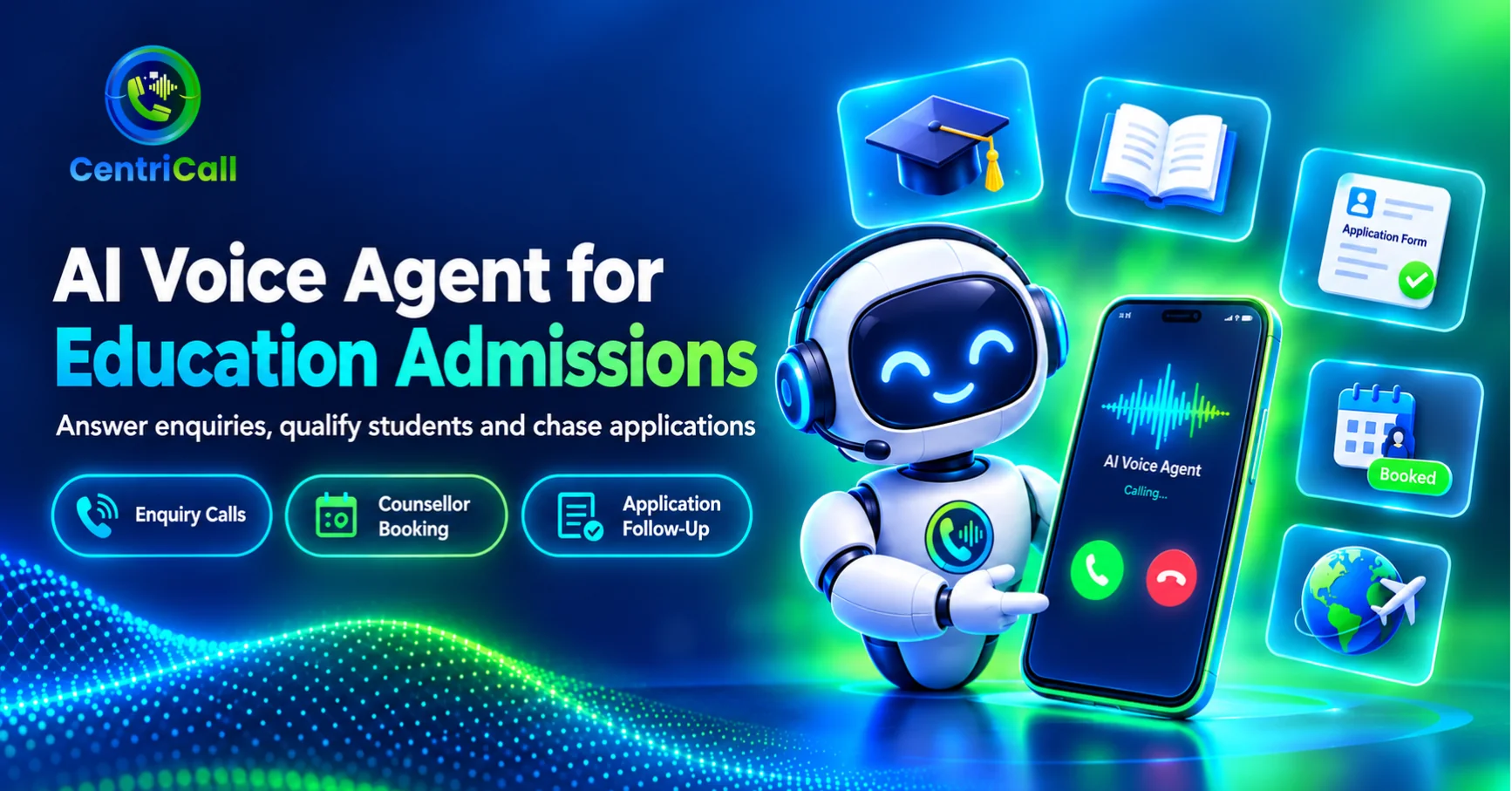
How an AI voice agent for education admissions answers enquiry calls, qualifies prospective students, books counsellor calls and chases incomplete applications, and what staff keep.
Admissions work in waves. Enquiries pile up around results days, deadlines and open days, then fall away. A prospective student who rings at a busy moment and gets voicemail rarely rings back. They apply somewhere that answered. That's the problem an admissions team has: demand that arrives faster than anyone can pick up the phone, followed by quiet weeks when the same staff have little to do.
An AI voice agent suits that pattern, because it can answer every call at once and go quiet when the wave passes. Here's what it does on an admissions line, how to set it up, and what to keep with your team.
What the agent does in admissions
It's a conversational agent that can answer and place calls. In admissions it usually takes four jobs.
- Enquiry calls: answers course, fee, entry-requirement and start-date questions from your approved information, at once, at any hour, in the caller's time zone.
- Qualifying prospective students: asks the same questions of each enquirer, such as subject, entry route, funding and intended start, and records the answers.
- Counsellor bookings: offers live slots from the admissions diary and books the call, then confirms by text or email.
- Application follow-up: rings applicants whose forms or documents are incomplete, reminds them of deadlines and logs what each one says.
How an enquiry call is set up
The agent is as good as the information and rules you give it. Have someone from admissions write them, since they know which questions applicants actually ask.
- Approved answers only: courses, fees, entry requirements, intake dates and the application process, taken from your own published material. Anything outside it goes to a person.
- A short qualifying set: three or four questions that decide the next step, such as what they want to study, where they are applying from, when they want to start and how they plan to fund it.
- Clear routing rules: which enquiries book a counsellor call, which go to a specialist team, such as international or scholarships, and which are simply answered.
- A written outcome: each call produces a transcript, a summary and a next step, written to your CRM, so a counsellor opens a record with the facts already in it.
That last step is where CRM integration matters: the enquiry, the answers and the booked slot all land in the applicant's record without anyone retyping them.
Handling international enquiries
International recruitment brings calls from every time zone and in many languages. The agent can detect the caller's language and reply in it, so an enquirer isn't left waiting for a team member who speaks it. Our multilingual AI receptionist guide explains how language detection and switching behave on a real call.
Where it fits
Universities and colleges
Intake spikes around results and clearing are where the agent earns its place, answering the volume and booking counsellor calls so staff talk to the qualified enquiries.
Schools
Open-day registrations, enquiry calls and place-offer follow-up all follow a pattern. The agent takes the routine calls and reminds families ahead of events.
Training providers and edtech
Providers selling courses by phone can use outbound calls to follow up leads quickly, qualify them against course criteria and book a call with an adviser. The mechanics are the same as lead qualification in any other sector.
What staff should keep
- Admissions decisions: offers, rejections, scholarships and exceptions are for people. The agent collects information and books the conversation.
- Sensitive circumstances: a student describing a difficult situation, a visa problem or a safeguarding concern should reach a person straight away.
- Consent and disclosure: outbound calls must follow the consent and calling-hour rules where the student is, and the agent should say it is an AI.
- An easy route to a human: anyone who asks for a person should be transferred or promised a callback.
What to measure
Judge the agent on funnel outcomes, not call counts: time from enquiry to first answer, the share of enquirers qualified, the share who book a counsellor call and attend, and the share of incomplete applications completed after a follow-up call. Every call is summarised, so you can read the ones that went wrong and improve the answers.
What it costs
Centricall publishes its plans from $49 a month with 50 included minutes and overage stated up front, so a pilot on one intake or one programme costs little before you commit. The AI voice agent pricing page has the full rates.
FAQs
What is an AI voice agent for education admissions?
- It's software that answers and places phone calls for an admissions team. It answers enquiries from approved information, qualifies prospective students, books counsellor calls and follows up on incomplete applications.
Can it handle intake spikes?
- Yes. It can take many calls at once, so results-day and deadline spikes don't push enquiries to voicemail, and it needs no seasonal hiring.
Can it answer international students in their own language?
- Yes. It detects the caller's language and replies in it, and can switch if the caller does.
Will it make admissions decisions?
- No. It gathers information and books conversations. Offers, rejections and exceptions stay with your admissions staff.
Does it work for schools and training providers, not just universities?
- Yes. Schools use it for enquiries and open-day reminders, and training providers and edtech firms use it to follow up leads and book adviser calls.
Do students know they're speaking to an AI?
- They should. We recommend the agent identifies itself in the greeting and offers a route to a person. Some regions require it.