Healthcare & Patients
Voice AI Agents for Healthcare: How They Transform Patient Communication
Aug 15, 2026
Part of AI voice agent for healthcare
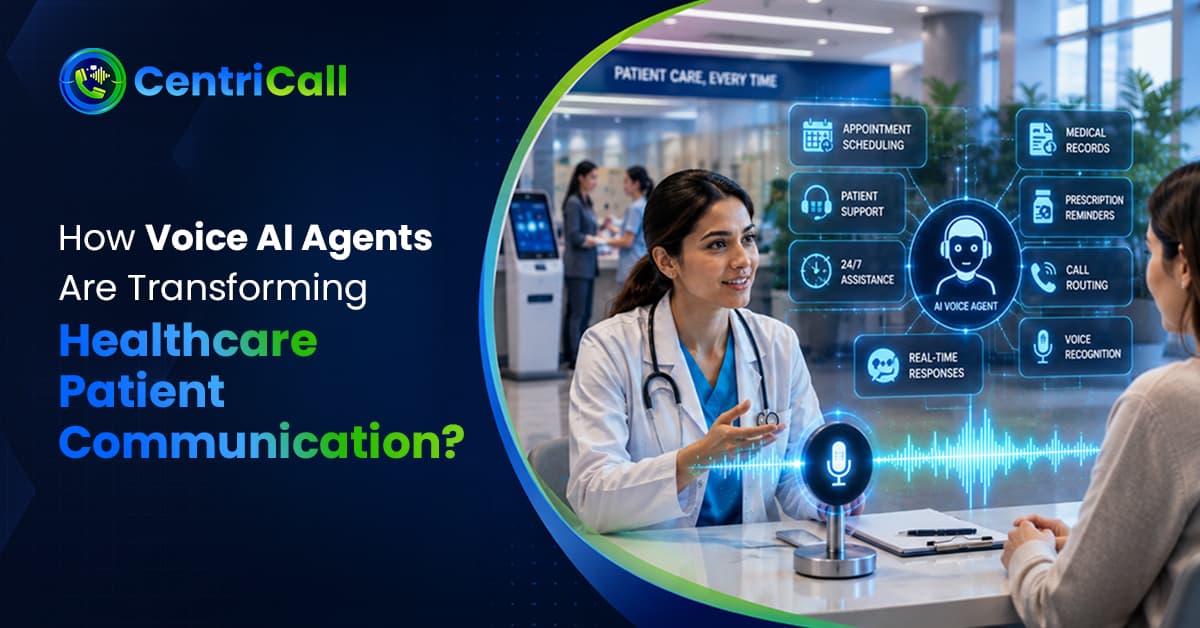
See how Voice AI Agents for Healthcare transform patient communication with faster responses, automated scheduling, appointment reminders, and 24/7 support.
An AI voice agent for healthcare is changing how people reach medical help. Patients can now more easily reach medical centers, large healthcare facilities, dental clinics, and testing labs, but when they call, their experience is still shaped by long waits, busy lines, and unanswered calls after hours. That is hard on staff too, who spend much of the day handling the same scheduling requests over and over.
Voice AI Agents for Healthcare can answer common calls, schedule visits, and confirm appointments. They also gather initial information and route complex issues to trained experts. The goal of the technology is not to replace medical professionals' thinking or the care provided to the person. Voice AI Agents for Healthcare make admin tasks easy.
They ensure a human is always available. Healthcare organizations need controls for identity verification, data access, data recording, data retention, and escalation. When those controls are built into the workflow, voice automation can improve patient access without treating every call as the same request.
- What they handle: scheduling, reminders, intake, refill routing, billing questions and after-hours escalation.
- What they do not: clinical advice, diagnosis, or anything your escalation rules send to a clinician.
- Where to start: the AI voice agent for healthcare page covers use cases, front-desk automation and compliance scoping in detail.
What Are AI Voice Agents in Healthcare?
AI voice agents in healthcare are phone-based systems that understand spoken requests, respond through natural conversation, and complete approved administrative actions. They may answer inbound calls or place outbound calls for reminders, confirmations, and follow-up.
- Patient scheduling: The agent checks approved availability, books visits, and confirms appointment details.
- Call routing: Billing questions, refill requests, referrals, and clinical callbacks reach the team.
- Routine information: Patients receive approved answers about hours, locations, services, preparation, or office policies.
- Post-call records: The system can create summaries, transcripts, outcomes, and follow-up tasks for staff review.
Centricall designs healthcare AI voice agents around each organization's call flows, calendars, knowledge sources, routing rules, and escalation requirements rather than applying one generic medical script.
How Do Voice Agents Improve Patient Access?
Voice agents improve access by giving patients a consistent way to complete phone tasks at any hour, supporting people who call after work, need another language, or prefer speaking to using a portal.
- First-call assistance: Patients can begin scheduling or explain their request without waiting for a receptionist.
- Multilingual communication: Supported languages can reduce avoidable barriers for patients and families.
- Live appointment actions: Calendar connections allow approved booking, rescheduling, cancellation, and confirmation during the call.
- Contextual transfers: Staff receive the caller's purpose and collected information before taking over the conversation.
Centricall combines continuous answering, multilingual support, calendar synchronization, and warm transfers so healthcare phone access remains practical without removing staff from conversations that require judgment.
What Are the Benefits of Using AI Voice Agents in Healthcare?
The benefits of using AI voice agents in healthcare extend beyond shorter hold times. Well-designed systems can reduce administrative pressure, improve appointment management, create clearer call records, and support more consistent communication.
- Lower call burden: Routine scheduling and information requests no longer require staff attention from beginning to end.
- Fewer missed opportunities: Calls received during lunch, evenings, weekends, or demand spikes still receive a response.
- Better appointment control: Reminder and confirmation calls help patients keep, move, or cancel visits earlier.
- Consistent intake: Defined questions help collect required nonclinical information in a predictable order.
- Stronger visibility: Summaries and outcomes show why patients call and where communication processes need improvement.
These advantages of AI voice agents become meaningful when they support measurable patient-service outcomes. Centricall tracks call volume, resolution, booking activity, routing, and follow-up needs instead of reporting calls alone.
Which Healthcare Calls Should Stay Human?
Voice automation should support healthcare staff, not make clinical decisions. Symptoms, emergencies, complex treatment questions, emotional conversations, complaints, and requests requiring professional interpretation should follow defined human escalation paths.
- Clinical questions: Diagnosis, medication decisions, treatment advice, and symptom interpretation belong with qualified professionals.
- Urgent language: Possible emergencies require immediate instructions and escalation based on the provider's approved protocol.
- Sensitive discussions: Distress, grievances, financial hardship, and complex care concerns benefit from personal attention.
- Unverified identity: Protected information should not be disclosed when required verification steps cannot be completed.
Centricall uses customizable scripts, guardrails, sentiment signals, and routing rules to keep routine calls moving while directing sensitive or out-of-scope requests to designated healthcare personnel.
How Should Healthcare Organizations Deploy Voice AI?
Successful deployment starts with one administrative workflow, not every patient call. Organizations should map the existing process, define permitted actions, limit data access, test difficult scenarios, and monitor real conversations before expanding.
- Choose a suitable workflow: Appointment scheduling, reminders, office information, or basic intake offer clear starting points.
- Set privacy boundaries: Define what information the agent may collect, retrieve, store, summarize, or disclose.
- Build escalation rules: Specify when the agent transfers, alerts on-call staff, or records a callback request.
- Test patient realities: Include accents, background noise, interruptions, incomplete answers, frustration, and accessibility needs.
- Review performance: Examine failed actions, transfer reasons, response accuracy, appointment outcomes, and patient feedback.
Centricall's managed process covers discovery, scripts, system connections, simulation, security review, soft launch, monitoring, transcript review, and continued refinement based on actual healthcare calls. Vendor selection belongs in that first step, and our breakdown of Vapi vs Retell AI HIPAA compliance and SOC 2 shows what to ask before patient data touches any platform.
What Is the Future of Voice AI in Healthcare?
The future of voice AI in healthcare will depend on safer integrations, broader language access, better continuity across phone and digital channels, and stronger oversight. Voice agents may increasingly coordinate scheduling, referrals, reminders, registration, and nonclinical follow-up while maintaining context across patient touchpoints.
Healthcare organizations will still need clear accountability. Technology vendors can provide access controls, retention settings, testing, and monitoring, but providers remain responsible for how patient information is used and how automated communication fits applicable requirements. The strongest AI Voice Solutions for Healthcare will therefore combine convenience with narrow permissions, documented workflows, transparent escalation, and continuous review.
How Can Centricall Strengthen Patient Communication?
Centricall builds custom voice agents for healthcare teams that need dependable scheduling, reminders, intake support, routing, after-hours coverage, multilingual conversations, and organized call records. Each deployment can connect with approved calendars, CRMs, databases, and APIs while using scoped access and business-specific guardrails.
The service includes call-flow design, knowledge setup, simulation, launch support, analytics, summaries, alerts, and ongoing optimization. This managed approach helps organizations improve administrative communication without asking clinical staff to design or maintain the entire calling system themselves.
Conversational AI in healthcare: where voice fits
Healthcare conversational AI is usually introduced through text first, in portal chat, symptom checkers, and reminders by SMS. Conversational AI technology in healthcare has done well there, and conversational healthcare bots now absorb a large share of the routine questions from patients who are already logged in. The limit appears the moment a patient picks up the phone instead, which for older patients and for anything urgent is most of the time. An AI voice agent in healthcare is the same idea applied to the channel patients actually reach for.
Healthcare AI agents on the phone do three things a chatbot cannot. They answer someone who has not logged in and is not going to. They handle a caller who is unwell or upset and would abandon a form halfway through. And they can complete the transaction, so healthcare call automation ends with an appointment in the diary rather than a promise of a callback. Voice AI systems for patient call automation should be judged on that completion rate before anything else.
Scheduling is where most deployments start
AI voice platforms for healthcare scheduling are the most common first deployment, because booking, rescheduling, and cancelling are high volume, low clinical risk, and simple to measure. When practices shortlist the leading voice AI solutions for healthcare appointment scheduling, three questions decide it: whether the agent writes into the same calendar the front desk already uses, whether it can hold a slot while it confirms the caller's details, and what it does when someone turns a booking call into a clinical question. Larger groups assessing the leading voice AI for healthcare call centers add concurrency and abandonment rate to that list.
Whatever the label, a healthcare voice assistant, an AI voice bot for hospitals, or simply AI voice agents healthcare teams put on the main number, the design rule does not change. Healthcare patient communication AI has to be scoped tightly: it completes the administrative work and escalates anything clinical to a person with the caller's details already captured. Voice AI healthcare projects fail on a vague boundary far more often than on weak technology, and conversational AI for healthcare industry deployments are no exception. Healthcare and conversational AI have a long enough shared history now that the failures are well documented, and almost all of them turn out to be scoping failures rather than engineering ones.
FAQs
How are voice AI agents used in healthcare?
- Voice AI agents support appointment scheduling, reminders, cancellations, basic intake, office information, call routing, and nonclinical follow-up. They should transfer clinical, urgent, or sensitive questions to qualified healthcare staff.
Can voice AI agents schedule patient appointments?
- Yes. When connected to an approved scheduling system, a voice agent can check availability, book appointments, reschedule visits, cancel bookings, and confirm important details during the same phone conversation.
Do healthcare voice agents replace front-desk staff?
- No. They reduce repetitive administrative calls while front-desk employees manage complex requests, patient concerns, insurance questions, unusual scheduling needs, and conversations requiring empathy or professional judgment.
Can voice AI agents handle multiple languages?
- Yes. Multilingual voice agents can identify and respond in supported languages, helping healthcare organizations improve phone access for patients who may struggle with English-only menus or call center services.
Are voice AI agents safe for patient communication?
- They can support patient communication when configured with controlled data access, identity-verification steps, approved scripts, retention policies, monitoring, and clear escalation rules. Healthcare organizations must also follow applicable privacy requirements.
When should a healthcare voice agent transfer a call?
- Calls should be transferred when patients report urgent symptoms, ask clinical questions, request a staff member, fail identity verification, express distress, or need assistance outside the agent's approved responsibilities.