Partners & Licensing
White Label AI Receptionist: How to Package, Price and Sell One to Local Businesses
Nov 16, 2026
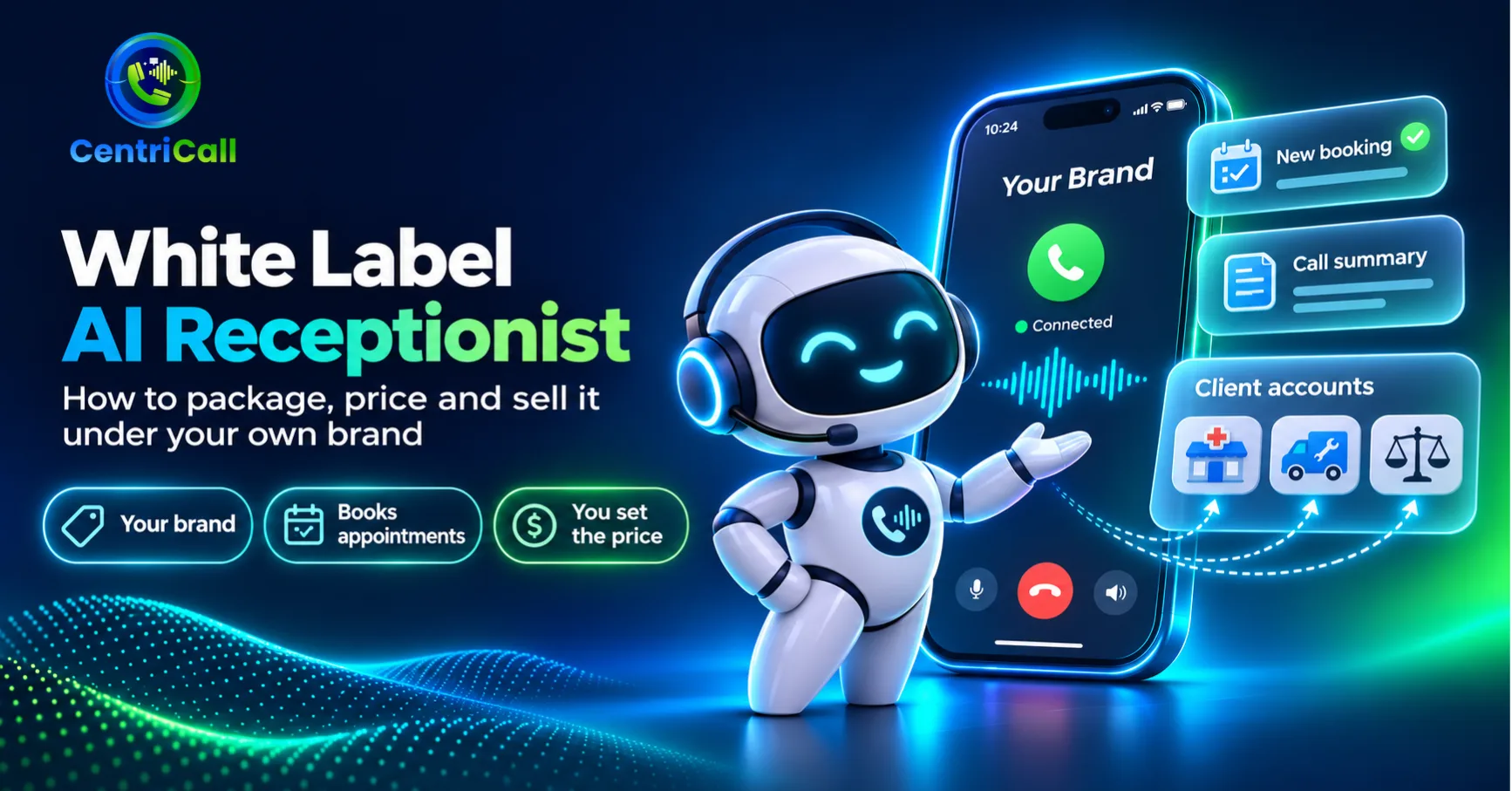
How to launch a white label AI receptionist under your own brand: what to include, how to price it against a part-time hire, who to sell to first and what to check before you license.
Searches for a white label AI receptionist are growing because the offer is easy to explain. Every local business loses calls, every owner understands what a missed call costs, and an AI receptionist fixes it at a price well below a person. For an agency, a managed service provider or a virtual assistant firm, it is a recurring-revenue product that sits naturally next to work you already do for the same clients.
This guide covers what a white label AI receptionist should include, how to price it, which clients to approach first, and what to check before you commit to a platform. If you want the wider picture of white label voice AI, start with our 2026 guide for agencies and resellers.
What Is a White Label AI Receptionist?
It is the same product a business would buy directly, with the vendor's name removed. The greeting uses the client's business name, the dashboard and summary emails carry your branding or theirs, and the login lives on your domain. The client sees you as the provider. The platform behind it stays invisible.
It differs from a white label answering service in one important way. A white label answering service resells people, so its cost rises with every call and its output is usually a message. A white label AI receptionist resells software that completes the call: it checks the calendar, books the slot and sends the confirmation. That is what makes the margin predictable and the product easy to renew.
What a White Label AI Receptionist Should Include
- Your branding end to end: greeting, voice, dashboard, login domain and summary emails, with no vendor name visible to the client.
- Calendar booking: the receptionist reads the client's real availability and books during the call. A receptionist that only takes messages is an answering service with a new label.
- Call summaries and transcripts: a written record of every call, sent to the client and logged in their CRM or inbox.
- Warm transfer and escalation: urgent or sensitive calls reach a person with the details already captured.
- Multi-tenant management: a single place to create, configure and monitor every client account, rather than a separate login per client.
- Industry templates: starting configurations for clinics, dealerships, law firms, trades and salons, so onboarding takes days instead of weeks.
- Client-facing reporting: calls answered, appointments booked and leads captured, so the monthly invoice is easy to defend.
How to Price a White Label AI Receptionist
Price against the alternative the client is already weighing, not against your platform cost. A part-time receptionist, or a live answering service, is the comparison a business owner makes. Published live answering plans run from about $250 to $1,725 a month on Ruby's minute-based tiers and from $300 to $2,100 a month on Smith.ai's call-based tiers, and those services usually end the call with a message. An AI receptionist that books the appointment can sit well below that and still carry a healthy margin.
- Monthly subscription plus setup fee: the most common model. A one-time setup covers configuration and testing; the monthly fee covers the line and ongoing tuning.
- Tiered by call volume: three tiers by included calls or minutes keep the entry price low and let busy clients grow into a higher plan.
- Per location: a natural fit for dental groups, clinics and franchises, where each site has its own line and calendar.
- Bundled into a retainer: for marketing agencies, the receptionist is the thing that turns the leads you generate into booked work, which makes it easy to justify inside an existing fee.
Whatever model you choose, check the cost structure underneath it. Some white label platforms charge per client, per minute or take a share of your revenue, which caps your margin as you grow. Others license the platform once and leave the pricing to you. Our white label licensing page sets out the second model: no per-client fee, no per-minute fee owed to us and no revenue share.
Who to Sell a White Label AI Receptionist To First
- Clinics and dental practices: high-value appointments, constant calls and a front desk that is always busy.
- Home service trades: owners on a roof or under a sink cannot answer, and the next number on the list wins the job.
- Law and accounting firms: a missed intake call is a missed client, and the work is billable by the hour.
- Veterinary clinics and pharmacies: heavy phone volume and staff who are hands-on while the line rings.
- Restaurants and salons: bookings and enquiries that arrive exactly when nobody is free to answer.
Start where you already have trust. An existing client who has complained about missed calls is a better first customer than a cold prospect, and a pilot on one line gives you a real call log to show the next one.
A Simple Rollout for Your First Five Clients
- 1. Audit the call log: ask the client for a week of missed or after-hours calls. The number is usually enough to sell the pilot.
- 2. Configure from a template: load the industry template, add the client's services, hours, prices and escalation rules.
- 3. Test with real scenarios: call the line yourself with the ten most common requests and the three awkward ones.
- 4. Start with after-hours: a low-risk first stage. Move to overflow, then first answer, once the client has read real summaries.
- 5. Report every month: send calls answered, appointments booked and leads captured. The report is what keeps the subscription.
What to Check Before You Choose a White Label Platform
- Can you remove the vendor completely?: domain, emails, voice and dashboard. A footer link to the vendor is a sign it is not truly white label.
- What happens to the price as you add clients?: ask about per-client fees, per-minute fees and revenue share before you build a pricing model on top.
- Who owns the client relationship and the data?: you should, along with the ability to move a client without losing their history.
- Can you run it without the vendor?: documentation, deployment guides and source access matter if the vendor changes terms or closes.
- Does it book, or only take messages?: booking into a real calendar is what separates a product from a repackaged answering service.
If you want to compare platforms side by side, our comparison of white label voice AI platforms sets out agency tiers, client limits and rebilling rights.
FAQs
What is a white label AI receptionist?
- A white label AI receptionist is an AI voice agent that answers calls, books appointments and logs every conversation, sold under your own brand rather than the platform vendor's. The client sees your name on the greeting, dashboard and reports.
How much can I charge for a white label AI receptionist?
- You set the price. Most resellers charge a monthly subscription plus a one-time setup fee, and position it against a part-time receptionist or a live answering service, which typically costs hundreds to thousands of dollars a month. Your margin depends on the platform's cost structure, so check for per-client and per-minute fees.
Is a white label AI receptionist the same as a white label answering service?
- No. A white label answering service resells human operators, usually ending the call with a message. A white label AI receptionist resells software that completes the call by booking the appointment and logging it, with cost that does not rise per call in the same way.
Who buys a white label AI receptionist?
- Local businesses that live on the phone: clinics, dental practices, home services, law and accounting firms, veterinary clinics, restaurants and salons. The buyer is usually an owner who already knows what a missed call costs.
Do I need technical skills to resell one?
- Not to sell it. A multi-tenant platform with industry templates lets a non-technical team configure each client. If you license the platform to run on your own infrastructure, you need someone comfortable with deployment, or a vendor who provides documentation and support.
Can I offer a white label AI receptionist to my existing clients?
- Yes, and that is the easiest place to start. An existing client who has mentioned missed calls is a better first customer than a cold prospect, and a pilot on a single line produces a real call log you can show the next client.