Outbound & Re-engagement
AI Voice Agent for Recruiting: How Recruitment Operations Run Screening Calls at Scale
Oct 27, 2026
Part of AI voice agent for recruiting
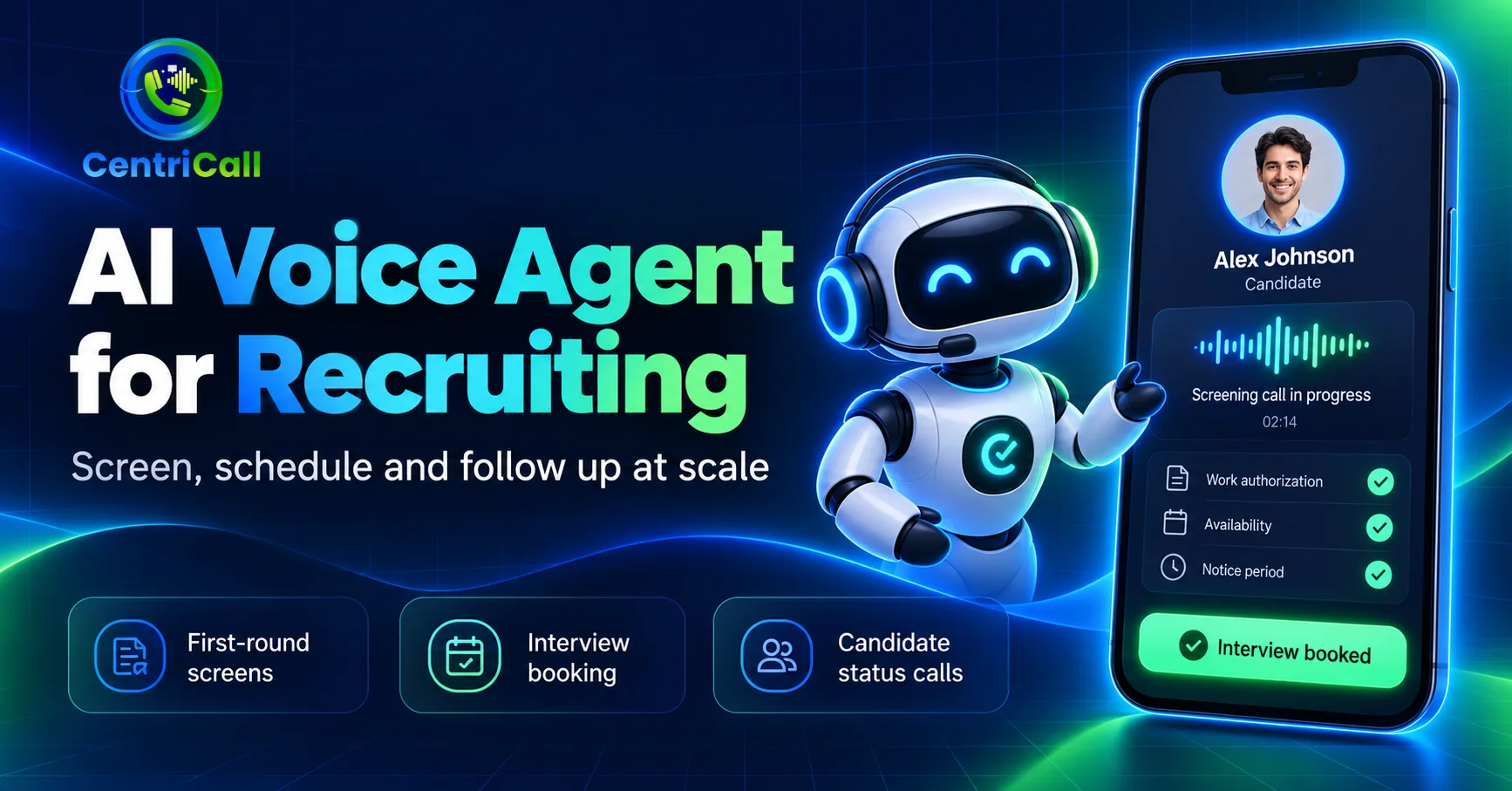
How an AI voice agent for recruiting handles first-round phone screens, interview scheduling and candidate status calls, and where a recruiter still decides.
Ask a recruiter where the day goes and the answer is rarely interviews. It is the first call to every applicant, the scheduling emails that take three rounds to settle, the voicemail left on Tuesday and chased on Friday, and the candidate who rings to ask whether anyone has seen their application. That is recruitment operations, and most of it is a phone problem with a data-entry problem attached.
An AI voice agent for recruitment is built for exactly that layer. This guide covers what it does on a call, how a screening flow is set up, where it fits in recruitment operations and where it should not be used.
What an AI voice agent does in recruitment operations
Behind the phrase sits a conversational agent that can both place and answer calls. If you want the plain definition first, our guide to what an AI voice agent is covers the basics. In recruitment it is typically given four jobs.
- First-round phone screens: rings the applicant soon after they apply and asks your screening questions in a fixed order, so every candidate is assessed on the same criteria.
- Interview scheduling: offers live slots from the hiring team's calendar and books on the call, then confirms by text or email.
- Status and FAQ calls: answers a candidate asking where their application stands, what the process is and when to expect news, from the record rather than from memory.
- Reminders and confirmations: calls ahead of an interview or a start date to confirm attendance and re-book if the candidate cannot make it.
How a screening call is set up
The agent is only as good as the screen it is given. A workable setup is short and specific, and it is written by the recruiter who knows the role.
- Knock-out questions first: work authorisation, location, availability, required licences. These are facts, and the agent records them as stated.
- Two or three role questions: what the candidate has done, in their own words, captured in full so a recruiter can read it rather than score a tick box.
- Practical questions: notice period, pay expectations, shift preference, so the shortlist is sorted on things that decide whether an offer is workable.
- A clear next step: book the interview, schedule a recruiter callback, or close politely with an explanation of what happens next.
Every call produces a transcript, a summary and an outcome that are written to the candidate record through CRM integration, so a recruiter opens the shortlist to a complete note rather than an empty field.
Where it fits: recruitment operations use cases
High-volume and hourly hiring
Roles that draw hundreds of applicants are where the first call costs the most recruiter time. The agent works through the list the same day, so the shortlist exists when the recruiter starts work rather than at the end of the week.
Staffing and recruitment agencies
Agencies can point the same agent at their own database: calling past applicants to confirm they are still available, taking vacancy details from a client by phone, and confirming attendance before a placement starts.
Interview no-shows
A reminder call the day before an interview recovers slots that would otherwise sit empty, and the candidate can re-book on the same call. The mechanics are the same as appointment reminder calls in any other sector.
What an AI voice agent should not do in hiring
A screen gathers information. It should not make the decision. Keep the following boundaries in place.
- No automated rejection on a judgement call: knock-out facts can route a candidate, but a person should review anything subjective before a candidate is turned down.
- Questions reviewed for fairness: screening questions should relate to the job and be reviewed against the employment law that applies where you hire.
- Consent and disclosure: outbound calls to candidates need the consent and calling-hour rules of the region, and the candidate should be told they are speaking with an AI.
- An easy route to a person: a candidate who wants a human should be put through to one, or promised a callback, without friction.
What to measure
Judge the agent on recruitment outcomes, not call counts: time from application to first contact, the share of applicants reached, the share of qualified candidates who book an interview, and interview attendance. Because every call is summarised, you can also read the failures, which is how the screen improves.
On cost, Centricall publishes its plans from $49 a month with 50 included minutes, so a pilot on one role costs little before you commit. See the AI voice agent pricing page for the all-in rates.
FAQs
What is an AI voice agent for recruiting?
- It is software that calls applicants, runs a structured first-round screen, books qualified candidates into the hiring calendar and answers status questions. It handles repetitive recruitment operations calls so recruiters can spend time on interviews and decisions.
Can an AI voice agent replace a recruiter?
- No. It does the repeatable calls: screening, scheduling, reminders and status. Judgement, relationships and every hiring decision stay with a person.
Is it suitable for staffing agencies?
- Yes. Agencies use the same agent to re-engage past candidates, take client vacancy details and confirm placements, writing outcomes back to their database or CRM.
Do candidates know they are speaking to an AI?
- They should. We recommend the agent identifies itself in the greeting and offers a route to a person, and some regions require it.
How are screening questions kept fair?
- The recruiter writes and reviews the questions, which should relate to the role. The agent asks them in the same order for every candidate and records the answers without scoring on protected characteristics.