Scheduling & Ops
AI Voice Agent for Logistics: Shipment Status, Delivery Booking and 24/7 Call Handling
Nov 27, 2026
Part of AI voice agent for logistics
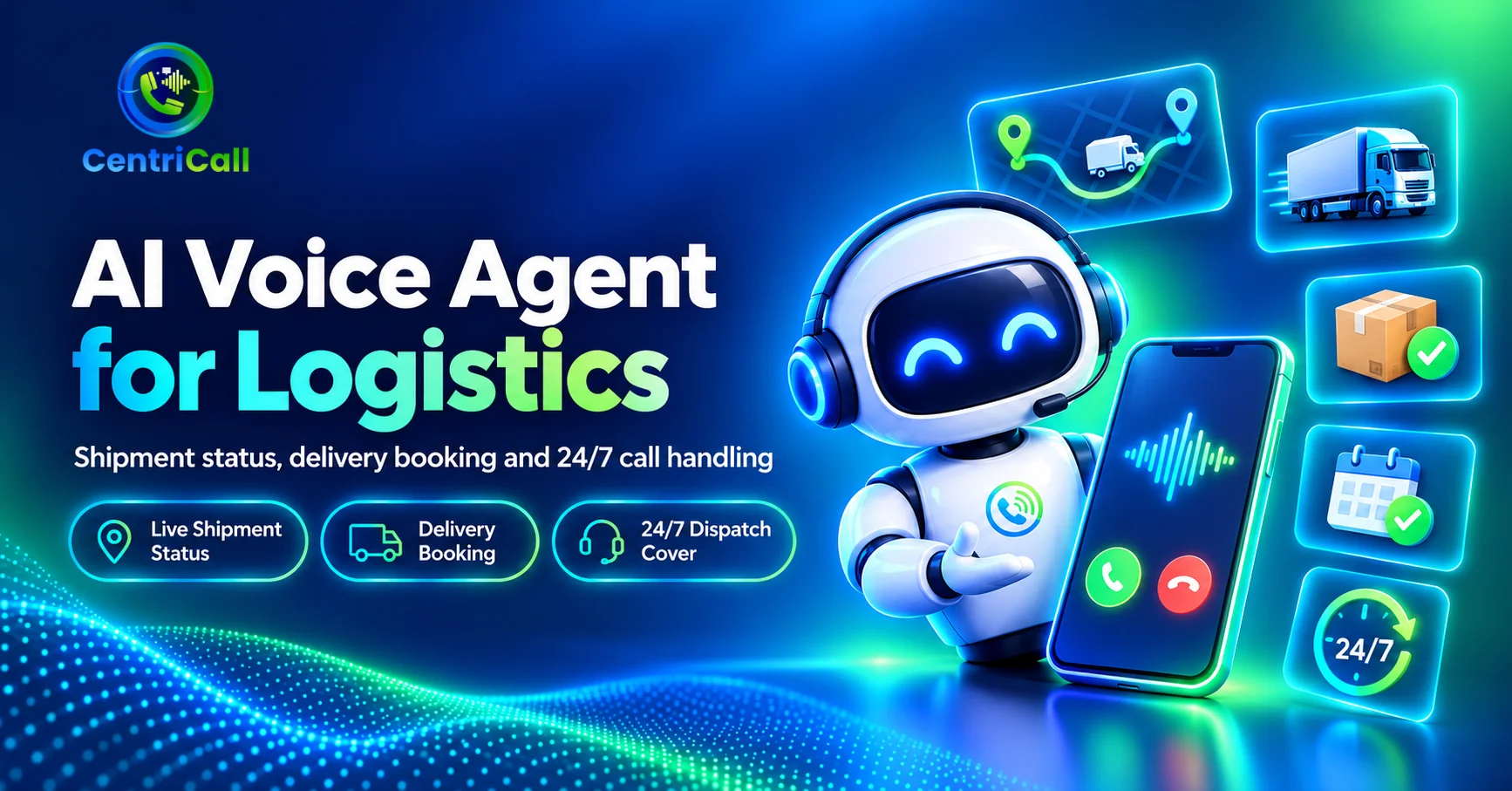
How an AI voice agent for logistics answers where-is-my-shipment calls, books delivery and collection slots and covers the line overnight, and what stays with dispatch.
Spend an hour on a dispatch desk and you'll notice that most calls are the same few questions. Where is my load? When does it tip? Has it cleared customs? Can you move the slot to Thursday? Each one has an answer sitting in a system already. The only reason a person is on the phone is that the caller has no other way to ask.
That's the case for voice AI in logistics. It isn't about replacing dispatchers. It's about taking the lookup calls off them so they can deal with the freight that has actually gone wrong. Here's what an agent does on a logistics line, how the lookups work, and where you should keep a person.
What an AI voice agent does on a logistics line
The agent answers the phone in natural speech, works out what the caller wants and acts on it. If you want the plain definition first, our guide to the AI voice agent covers the basics. In logistics it usually takes five jobs.
- Shipment status and ETA calls: takes the reference number, looks the consignment up and reads back the current status and expected delivery time, instead of putting the caller on hold for a coordinator.
- Delivery and collection booking: offers the open windows, books the one the caller picks and confirms it by text or email, so the slot is agreed on the first call.
- Driver check-ins: answers a driver ringing in with an arrival, a delay or a problem, records it against the job and flags anything urgent to dispatch.
- Proof-of-delivery and confirmation chasing: rings receivers and carriers to confirm a slot or chase paperwork, and logs the outcome.
- After-hours cover: picks up overnight and at weekends, so a driver at a locked gate or a customer in another time zone reaches someone.
How the live lookup works
A status call is only useful if the answer is right. The agent doesn't guess. It reads from your own systems while the caller is still talking, through external database integration, so the status it gives is the one your transport management system holds right now.
- Identify the job: the caller gives a consignment, order or booking reference, and the agent confirms it back to catch a misheard digit.
- Check the caller is allowed to ask: you decide what needs verifying first, such as a postcode or account name, before a status is read out.
- Read the record: status, last scan, expected delivery window and any exception flag come from your system, not from the agent's memory.
- Act or hand over: rebook a window, take a message for the driver, or transfer to dispatch with the details already captured.
Every call is recorded, summarised and written back to the job, so dispatch can see who called, what they were told and what was changed. If you also run a CRM, the same outcome can sync there through CRM integration.
Where it fits in a logistics operation
Freight and haulage dispatch desks
Chase calls cluster around the same loads: the one that's late, the one that's rescheduled. The agent absorbs the repetitive status questions, and exceptions go to a person with the context attached.
Couriers, last-mile and delivery firms
Receivers call to ask where a parcel is or to change a window. An agent can answer from the tracking record and rebook, and can ring the night before to confirm someone will be in, in the same way as appointment reminder calls in other sectors.
Warehouses and 3PLs
Dock-slot booking, carrier arrival calls and customer stock questions all follow a pattern. The agent books slots against your calendar rules and takes the carrier's arrival call so the warehouse team isn't interrupted.
Shipping companies taking bookings
For a firm that books collections by phone, the agent can take the pickup address, goods details and preferred window, check them against your rules and hand a complete booking to the team.
What to keep with dispatch
An agent is good at questions with a known answer. Keep people on the rest.
- Exceptions and damage: a damaged load, a customs hold or a missed collection needs a person who can decide. The agent should capture the facts and escalate, not improvise.
- Safety-critical calls: an incident involving a driver or a hazardous load should route to a human immediately by a rule you set.
- Commercial disputes: pricing, claims and contract questions are for your team.
- A clear route to a person: a caller who wants a human should be transferred, or promised a callback, without friction.
What to measure
Track the share of status calls closed without a coordinator, the time from call to answer, the number of repeat chase calls per shipment, delivery slots booked on the first call and exceptions raised before the customer has to ask. The agent's call summaries also show which lanes and customers generate the most chasing, which points to where proactive updates would remove calls altogether. Our guide to voice agent metrics covers the wider set.
What it costs
Centricall publishes its plans from $49 a month with 50 included minutes, with overage stated up front, so a pilot on one lane or one customer's status calls costs little before you commit. The AI voice agent pricing page has the full rates.
FAQs
What is an AI voice agent for logistics?
- It's software that answers and places phone calls for a logistics business. It looks up shipments in your system, reads back status and ETAs, books delivery and collection slots, takes driver check-ins and covers the line 24/7, passing exceptions to dispatch.
Can an AI voice agent give live shipment status?
- Yes, if it's connected to your transport management system or database. It reads the record while the caller is on the line, so the answer is current rather than scripted.
Can it book delivery and collection slots?
- Yes. It offers the open windows under your rules, books the one the caller chooses and sends a confirmation, and it can ring ahead to confirm the slot.
How is it different from an IVR?
- An IVR routes the caller down a menu and still needs a person to answer. The agent takes the reference, looks up the job and tells the caller what they rang to find out.
Will it replace dispatchers?
- No. It takes the repetitive lookup and booking calls. Exceptions, safety issues, damage and commercial decisions stay with your team.
Does it work for small logistics firms?
- Yes. A small operation can start with one use, such as status calls or after-hours cover, on a published plan from $49 a month.