Voice & Conversation
What Makes an AI Voice Agent Actually Sound Human
Jun 14, 2024

What separates a robot reading a script from a natural phone conversation: timing, turn-taking, interruptions, and knowing when to stop talking.
People decide whether a voice sounds human within a sentence or two, and they are rarely fooled by accuracy alone. A voice can pronounce every word perfectly and still feel robotic, because what we react to is not just how words sound, it is the rhythm of the exchange. Real conversation has a texture: small pauses, gentle overlaps, the quick acknowledgment that tells you the other person is still listening. Get the timing wrong and even a beautiful voice feels like a recording.
That is why building a voice agent people are comfortable talking to is less about the voice itself and more about the conversation around it. A handful of details, most of them about timing, do the heavy lifting.
Latency is the whole game
The single biggest tell is the gap before the agent responds. In natural speech, replies come back in a fraction of a second. When a caller finishes a sentence and waits a beat too long, the silence feels wrong, they wonder if they were heard, start to repeat themselves, and the illusion of a conversation collapses. Keeping that response time low, end to end from the caller's last word to the agent's first, is the difference between a dialogue and a walkie-talkie.
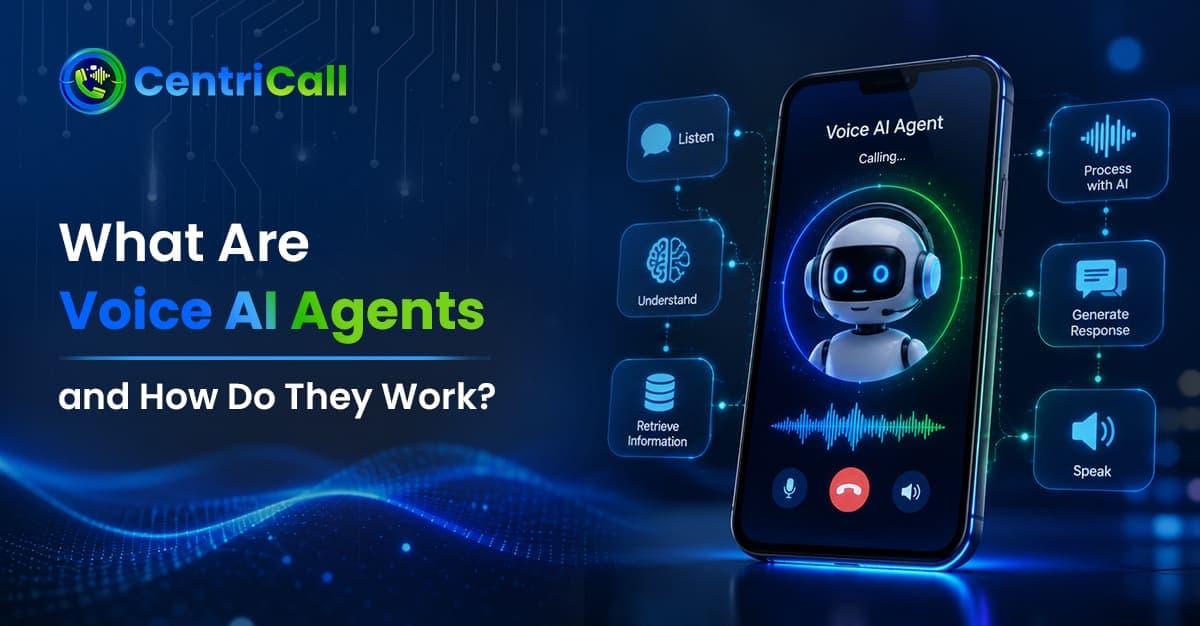
Low latency is not a single setting; it is the sum of every step in the pipeline, hearing the caller, understanding intent, deciding what to say, and saying it. Shaving time everywhere is what keeps the back-and-forth feeling alive rather than transactional.
Turn-taking and knowing when to stop
Humans manage turns with remarkable precision. We sense when someone has finished a thought versus when they have merely paused to breathe, and we wait accordingly. A good agent has to do the same: jump in too eagerly and it talks over the caller; wait too passively and the conversation stalls. Reading the difference between a finished sentence and a thinking pause is what makes an exchange feel cooperative instead of stilted.
Just as important is how the agent behaves when it is interrupted. People interrupt constantly, to correct, to add a detail, to cut to the chase. An agent that keeps plowing through its sentence while the caller is clearly trying to speak feels deaf. One that stops, listens, and adjusts feels present.
- Backchanneling: the small acknowledgments that signal the agent is following along, so the caller is not talking into a void.
- Graceful interruption: stopping mid-sentence when the caller speaks up, rather than finishing the script and forcing them to repeat themselves.
- Natural pacing: varying rhythm and leaving short, human pauses instead of delivering everything in one flat, breathless run.
“Callers rarely praise a voice for sounding human. They just keep talking naturally and forget to perform for a machine, which is the highest compliment the technology can earn.”
Recovery is more human than perfection
No conversation goes perfectly, and trying to build an agent that never stumbles is the wrong goal. What separates a convincing agent from a brittle one is how it recovers. When it mishears, it asks a quick clarifying question instead of guessing. When a caller goes off-script, it acknowledges the new direction rather than steering blindly back to its checklist. When something is genuinely beyond it, it hands off to a person without making the caller start over.
Sounding human, in the end, is not about imitation for its own sake. It is about respecting the caller's time and attention, responding quickly, listening properly, and getting out of the way once the job is done. A voice agent built around those instincts does not need to pretend to be a person. It just needs to be easy to talk to, which is the thing callers wanted all along.
The words matter less than people think, but they still matter
Timing does most of the work, but script choices can undo it. A few writing habits reliably make an agent feel synthetic even when the audio and latency are good.
- Sentences written to be read: long, subordinate-clause-heavy copy sounds like a brochure being narrated. Spoken language is short, and it front-loads the useful part.
- Repeating the caller's whole answer back: confirming every detail verbatim is a habit from IVR menus, and it doubles the length of the call. Confirm the things that are costly to get wrong, and let the rest pass.
- Over-apologising: an agent that says sorry three times in a minute draws attention to itself. One clean acknowledgement and a move forward reads as competence.
- Asking two questions at once: people answer one of them, usually the second, and the agent has to circle back. One question per turn keeps the exchange moving.
Reading the script aloud is a surprisingly good test. Anything you stumble over, the agent will deliver in exactly that stumbling shape.
Where a demo will mislead you
Every vendor demo is recorded under conditions that flatter the technology: a quiet room, a cooperative caller, a request the agent was built for. Real calls are none of those things, and the gap is where disappointment comes from.
- Test on a bad line: a mobile in a car park with wind and traffic is a normal call for most businesses, and it is where speech recognition degrades first.
- Test with a difficult name: an unusual surname, spelled out under time pressure, is the single most common point of failure in booking calls.
- Test an interruption: cut across the agent mid-sentence and change your mind. How quickly it stops talking tells you more than any scripted exchange.
- Test something out of scope: ask for something it was never built to do. Whether it improvises confidently or hands over cleanly is the behaviour you will live with.
An agent that holds up under those four is genuinely easy to talk to. One that only shines in a scripted demo will sound human right up until the first real caller.
What is AI voice? The same words cover four different products
Search for artificial intelligence voice and you land in four markets at once. AI voiceover and AI voice generation produce recorded audio from a script you supply. AI voice acting and an AI voice actor describe the same market from the performer's side, and an AI narrator voice is what most people are actually buying there. Voice changing AI, an AI voice mimicker, and AI voice change tools transform one recorded voice into another. None of those three hold a conversation with anybody. What is AI voice in the sense this article means is the fourth thing: an AI voice conversation happening live, in both directions, with a person who can interrupt.
The distinction matters because the engineering problems barely overlap. A realistic AI voice in a voiceover is judged on a finished file you can re-render until it is right. A realistic AI voice on a phone call gets one attempt, in real time, over a compressed line, against a caller who says “sorry, what?” halfway through. AI voice generation for narration can take four seconds to produce a sentence and nobody minds. An AI voice response on a live call has roughly three hundred milliseconds before the silence starts to sound wrong.
Voice bots, voice agents, and the words in between
Voice based conversational AI is the umbrella term, and underneath it the labels get sloppy fast. An AI voicebot, a voice bot AI, an AI chatbot voice bolted onto a text assistant: vendors use all of them for products that differ enormously in what they can actually do. Voice conversational AI that recognises a dozen intents is an automated voice menu in better clothes. Voice to AI systems that transcribe you and hand the text to a chatbot inherit every pause that round trip costs, which is why AI voice chats built that way feel laggy even when each individual component benchmarks well.
AI voice text pipelines are the honest description of most of these: speech in, text through a model, speech out. Newer AI voice to voice models skip the text stage for parts of the exchange, which is much of why AI speaking has stopped sounding like a document being read aloud. An AI talker voice that never varies its pace is the giveaway, because people slow down when they are thinking and speed up when they are only confirming. AI chat with voice attached is not the same as a system designed for voice from the first line of code, and callers hear the difference within two sentences even when they cannot name it. The voices AI systems produce are rarely the problem now; timing is. AI voice replacement of a human on a phone line fails on turn-taking long before it fails on timbre. AI generating voice at broadcast quality is a solved problem. AI generating voice that knows when to stop talking is not.
FAQs
Why do some AI voice agents still sound robotic?
- Almost always timing rather than voice quality. Synthesis is good enough now that the audio itself is rarely the problem; what gives an agent away is the pause before it replies, talking over the caller, or ploughing through a sentence when someone is clearly trying to interrupt. Fix the rhythm and a mediocre voice passes; leave it broken and a beautiful voice does not.
How fast does an AI voice agent need to respond?
- Natural conversation turns around in a fraction of a second, and callers start to feel something is wrong well before a full second has passed. What matters is the end-to-end figure from the caller's last word to the agent's first, not the speed of any single component, because the delay is the sum of hearing, understanding, deciding and speaking.
Should an AI voice agent pretend to be a person?
- No, and it is increasingly a regulatory question rather than a stylistic one. A brief disclosure at the start costs a second and tends to improve the call, because callers who know they are speaking to an agent articulate more clearly and interrupt less. Sounding human and claiming to be human are different goals.
Can an AI voice agent handle interruptions?
- A well-built one stops speaking as soon as the caller does and picks up from the new direction rather than finishing its sentence. This is one of the most useful things to test in an evaluation, because it separates systems designed for real conversation from ones designed to read a script aloud.
Does the choice of voice matter?
- Less than most buyers expect. Accent and warmth are worth matching to your customer base, but they will not rescue an agent with poor turn-taking, and they are rarely what a caller comments on afterwards. Spend the evaluation time on timing and recovery behaviour, then pick the voice you would be comfortable answering your own phone.